
Blog
AFSS vs AESMR: What Building Owners Need to Know Across NSW & Victoria
If you own or manage buildings in New South Wales or Victoria, fire safety compliance isn’t something to shove in the “deal with it later” pile. Two documents sit at the centre of these obligations: the AFSS in NSW and the AESMR in Victoria.
They serve a similar purpose. Both help confirm that fire and life safety systems are being maintained and can perform when needed, but they sit under different state frameworks, with different terminology, processes and documentation requirements. For building owners with assets across NSW and Victoria, knowing the difference isn’t just useful… it can save a lot of stress when deadlines, audits or council requests roll around.


What is an AFSS in NSW?
An AFSS, or Annual Fire Safety Statement, is required for many NSW buildings. It confirms that the essential fire safety measures listed on the building’s fire safety schedule have been inspected and assessed by an appropriately accredited practitioner, and that each measure can perform to the required standard.
The annual fire safety statement must be lodged with the relevant local council and Fire and Rescue NSW, and a copy must be displayed prominently within the building. Common measures covered in an AFSS include fire detection systems, sprinklers, hydrants, hose reels, extinguishers, emergency lighting, exit signage, smoke control systems, fire doors, passive fire protection and paths of travel to exits.
The fire safety schedule is the key reference document; it lists the measures that apply to the building and the performance standard each one must meet. Without a current, accurate schedule, NSW fire safety compliance can get messy quickly.
What is an AESMR in Victoria?
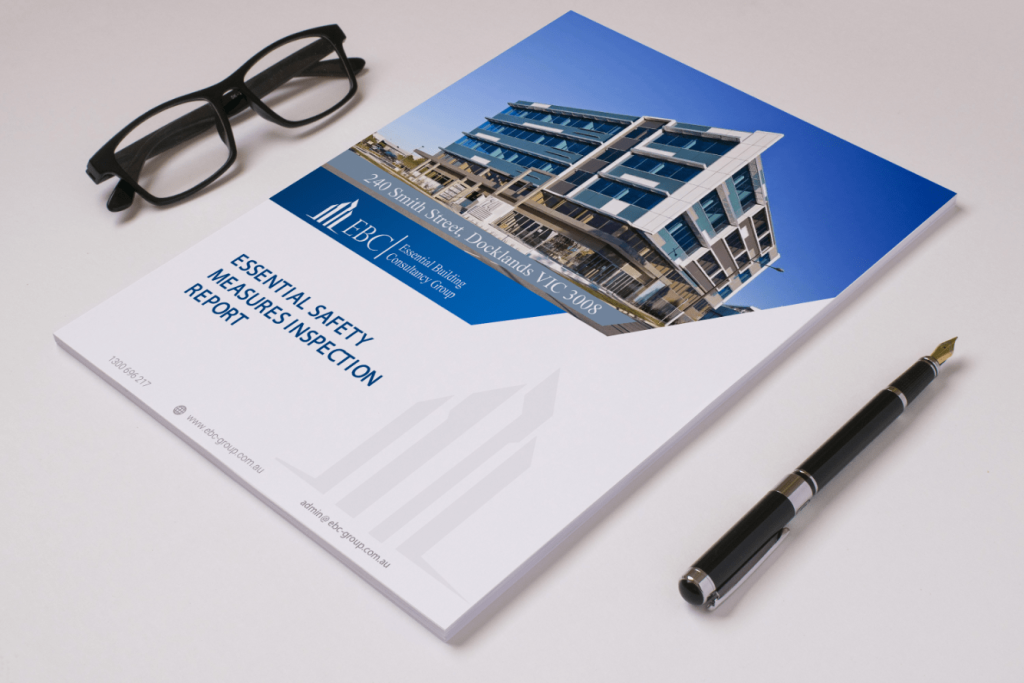
An AESMR, or Annual Essential Safety Measures Report, is the Victorian annual reporting document for essential safety measures. It confirms that the building’s required safety measures have been maintained during the previous 12 months.
Victoria essential safety measures can include active fire systems such as alarms and sprinklers, along with passive and building-related measures such as fire doors, fire-rated construction, exits, paths of travel, emergency lighting and mechanical services.
The Annual Essential Safety Measures Report is prepared by, or on behalf of, the building owner. It needs to be supported by inspection, testing and maintenance records that show the relevant measures have been properly maintained throughout the year.
In plain terms, the AESMR is only as reliable as the maintenance system sitting behind it.

The main difference between AFSS vs AESMR
The AFSS and AESMR both support ongoing fire safety compliance, but they’re not interchangeable. In NSW, the AFSS is tied to the fire safety schedule and must be lodged annually with council and Fire and Rescue NSW. In Victoria, the AESMR confirms the maintenance of essential safety measures and must be kept with supporting records, ready to produce when required.
The purpose is similar: safer buildings, stronger accountability and clear evidence that life safety systems are being maintained. The process is different, and building owners need to manage each one according to the relevant state requirements.
Why do these reports matter?
It’s easy to treat fire safety reporting as paperwork; that’s where risk starts to creep in. An Annual Fire Safety Statement or Annual Essential Safety Measures report provides evidence that the systems designed to protect occupants are being inspected, maintained and documented. These systems may sit quietly in the background most of the time, but in an emergency they need to work immediately. A properly managed AFSS or AESMR helps building owners identify defects, reduce enforcement risk, support insurance and liability management, maintain better records and protect tenants, residents, staff and visitors.
The value isn’t just in the final document; it’s in the process behind it.
H2: Common issues for building owners
Many fire safety compliance problems come back to poor documentation. Older buildings, strata properties, refurbished sites and buildings with multiple agents over time often have incomplete records or unclear compliance histories. Common issues include missing fire safety schedules, outdated maintenance records, unresolved defects, unclear contractor scopes, inaccurate measure lists and due dates being tracked manually. These gaps can delay inspections, affect lodgement and increase regulatory risk; it’s far easier to fix them early than to rebuild the compliance picture days before a deadline.
Who’s responsible?
In both NSW and Victoria, the building owner carries the core responsibility. An agent, strata manager, facilities manager or contractor may coordinate parts of the process, but the owner must ensure the correct measures are maintained, records are retained, defects are addressed and annual reporting obligations are met. Engaging contractors isn’t the same as managing compliance; owners still need a clear system for tracking what’s been inspected, what’s been certified, what’s still outstanding and what evidence is available.

Managing AFSS and AESMR across multiple buildings
For owners and managers with properties across NSW and Victoria, consistency matters. Each building may have different due dates, systems, contractors, fire safety schedules, occupancy permit records and authority expectations. A strong portfolio-wide approach should include centralised registers, current documentation, clear contractor responsibilities, defect tracking, annual statement records and regular review of maintenance reports. This cuts down uncertainty and makes compliance easier to manage year-round, instead of turning it into a last-minute scramble.
How EBC Group can help
EBC Group supports building owners, strata managers, facilities teams and property professionals with AFSS and AESMR compliance across NSW and Victoria.
- For NSW properties, we assist with AFSS coordination, fire safety schedule reviews, documentation checks, practitioner coordination, defect tracking and lodgement support.
- For Victorian properties, we assist with AESMR preparation, essential safety measures management, contractor record reviews, building compliance audits and long-term maintenance oversight.
We also help where records are incomplete, compliance history is unclear or multiple sites need a more structured system. Our approach is practical and detailed; our team helps owners understand what applies, what’s missing, what needs attention and how to maintain compliance with confidence.
Need support with AFSS or AESMR compliance?
Whether you manage one building or a multi-state portfolio, EBC Group can help simplify your fire safety obligations. Our team provides end-to-end support across AFSS, AESMR, essential safety measures management, building compliance audits, evacuation diagrams, block plans and emergency planning documentation. If your due date is approaching, your records are unclear or you want a more reliable compliance system in place, speak with EBC Group for clear, practical guidance.